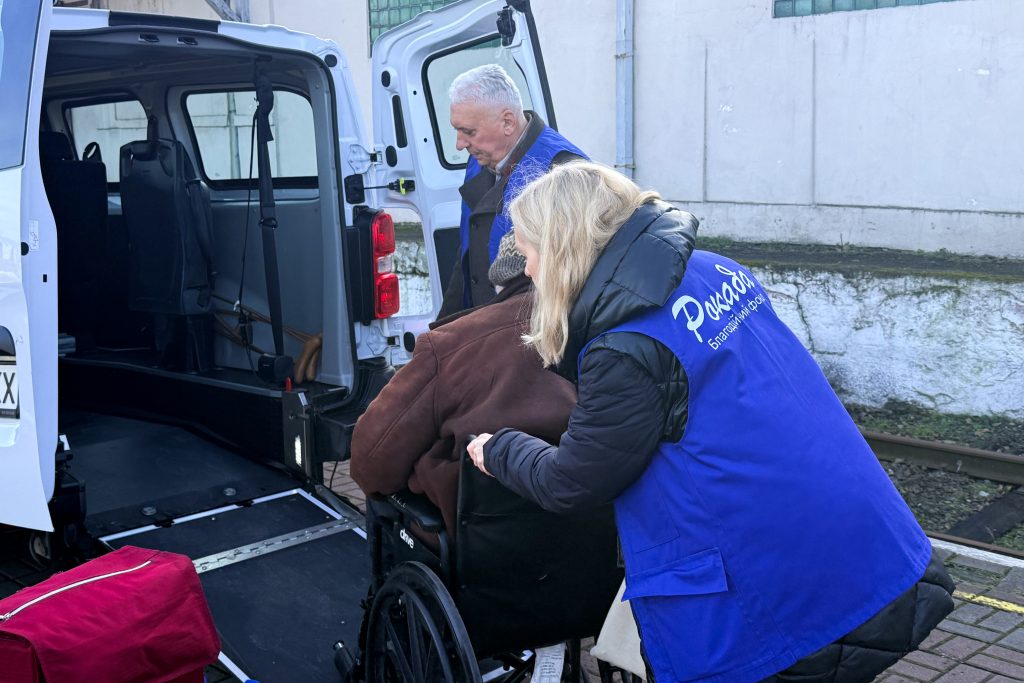
In the Mykolaiv region of southern Ukraine, thousands of people with disabilities, children with special needs and internally displaced families live with daily barriers to accessing even the most basic public services. The war has exacerbated an already difficult situation: buildings are damaged, resources are stretched, and many institutions are simply not designed for everyone.
Therefore, Danish People's Aid, together with the Ukrainian civil society organization, Rokada launched a new two-year project to strengthen accessibility and inclusion in public institutions in the Mykolaiv region.
More than physical improvements
The project focuses on upgrading ten selected institutions – including social centers, health clinics, libraries and administrative buildings – to make them physically accessible and provide inclusive, multifunctional spaces that can provide space for rehabilitation, psychosocial support and inclusive learning.
But the effort doesn't stop at bricks and furniture. Employees in the institutions receive training in inclusion, disability understanding and first aid, so that access to services also becomes real in the encounter between people. And we also use the initiative to spread knowledge of basic first aid.
Local ownership and long-term change
A central element of the project is the work with local Barrier-Free Councils – councils that bring together citizens, civil society and authorities. The councils must help ensure that the improvements are maintained and that accessibility is taken into account in local plans and budgets in the future.
“When communities themselves see the results and take responsibility, inclusion stops being a project and becomes part of everyday life,” says Kateryna Matsko, regional coordinator of Rokada in Mykolaiv.
Part of Ukraine's barrier-free ambitions
Ukraine has national strategies for a more accessible society, but implementation is lagging – especially in war-torn areas. With this project, Danish People's Aid and Rokada contribute to translating political ambitions into concrete solutions that can be copied and scaled to other local communities.
The project is supported by the Ministry of Foreign Affairs through CISU's Neighborhood Fund and runs until 2027.