By Mirka Mozer, Secretary General
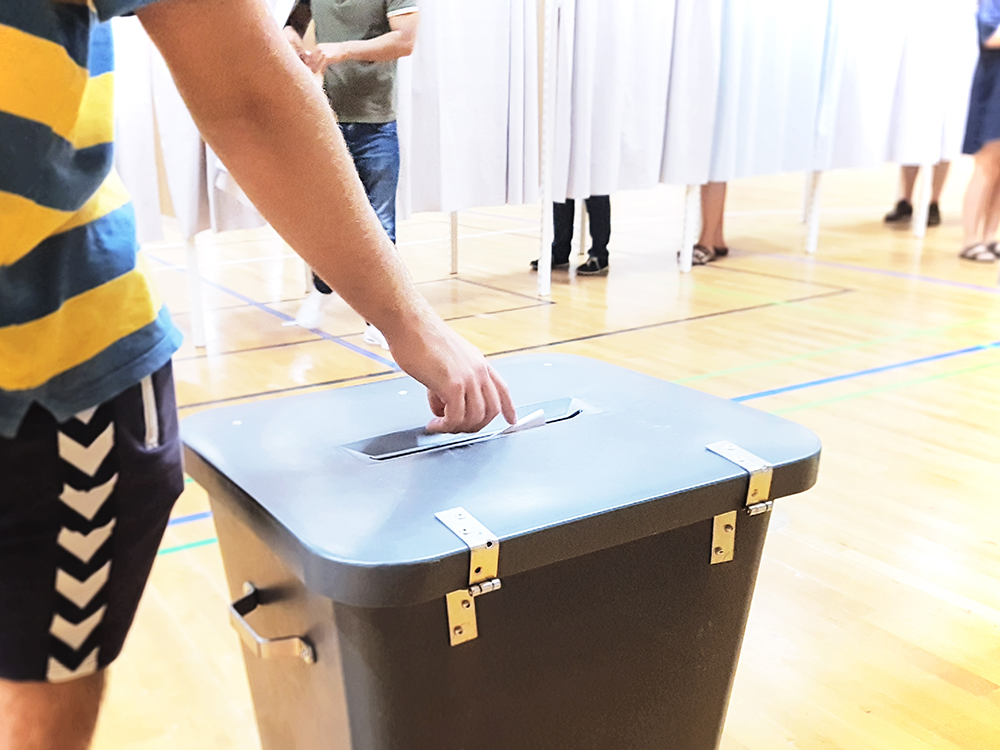
Danish democracy has a problem. It claims to be representative, but it is not. Of course, it is never realistic to expect a 100% turnout when there is an election.
But if only 351% of a population group goes to the ballot box, something is completely wrong.
The University of Copenhagen has analyzed the participation in the 2021 municipal elections: Only 351% of social assistance recipients voted. In comparison, this was the case for 681% of employed people (which should also be higher).
At Danish People's Aid, we have, together with the Danish Labour Movement's Business Council, conducted a study that focuses on the marginalization of Danes on transfer income.
9,588 people participated in the survey, and they all applied for financial assistance from Danish People's Aid. Of these, 5,879 of the participants received Christmas assistance in December 2024.
The study gives us a better understanding of why voter turnout among some of Denmark's most vulnerable people is so low: Only 251% of Christmas aid recipients feel like an important part of society.
According to the study, there is a close correlation between the length of time you have received social security benefits and how important a part of society you feel you are. A majority of respondents – 53% – also feel that there is a general prejudice in society against people who receive public benefits.
More than one in three has experienced being met with such prejudices, and 46% experiences that other Danes have either no or only a low degree of understanding of the challenges of living in economic poverty.
Furthermore, there is a political discourse in our society that has for many years equated having a job with being valuable. As one early retirement pensioner explains in an elaborate response to the survey:
”"I find that you only have value when you can work. If you can't, then you are not interesting as a person and almost a burden to society."”
At Danish People's Aid, we have in-depth knowledge of the conditions that characterize the lives of people on social security benefits. The economy is only one aspect. In addition, there are often challenges with illness, difficult family relationships and social isolation - the latter caused, among other things, by the stigmatization of the rest of society.
If you have a weak connection to the social community, and all your energy is spent on making everyday life work together, then it is quite obvious that you may have a hard time finding the energy to really get involved in a municipal election.
If you also experience that no one in your circle of friends votes, and if you come from a family where mom and dad have never voted either, then the easy and obvious solution is to skip the election altogether.
But if an election is supposed to be a democratic celebration, it makes no sense that a large portion of the guests do not feel welcome and do not show up for the party at all.
The solution is not, for all intents and purposes, to shame people on social security benefits who do not go to the ballot box.
On the other hand, the solution is to understand what is preventing them from voting – and based on this, implement initiatives that can strengthen voter turnout.
In the long term, it's about information campaigns. School projects about democracy. Increased accessibility to polling stations and efforts to ensure that everyone knows how to cast their vote in practice.
Here and now, with the next election just around the corner, it's about reaching out to citizens where they are. Via housing organizations, local networks and associations. In addition, the 35% of social assistance recipients who vote must be encouraged to speak out about it – and to support their fellow citizens. Because voter turnout is socially contagious.
Above all, however, we must insist on a change of discourse – both at Christiansborg and at home in our living rooms – that can stop the shaming of vulnerable citizens. Let us agree that all people are of equal value and therefore deserve the same political representation. Otherwise, we will never have a democracy that is truly representative.
We talk a lot about gender equality. That's a good thing. It's time we talked just as much about equality between rich and poor.